
Give the timeline a narrow purpose
An accident timeline is useful because it shows the order in which information became available. It need not explain everything that happened or decide who caused it. Begin with the accident entry, then add later stages such as a document arriving, a claim conversation or a request being answered. Keeping the stages separate protects the account from becoming a story written entirely with hindsight.
Write a heading that identifies the accident date and location as accurately as you can. Use approximate wording when necessary. If you have no reliable time, leave it blank rather than assigning one from a later message. A timeline with a visible unknown is still a working tool. A timeline with a fabricated precision can create a problem when it is compared with other records.
Use three kinds of time
For a document, distinguish the time of the event it describes, the time the document was created and the time you received it. A report may arrive days after an accident. A receipt may be printed after a service. A photograph may show the aftermath rather than the impact. Those different times should not quietly become one entry.
A simple annotation can be enough: 'received on this date; describes an earlier event.' Do not force a sequence because two devices show different clock times. Preserve the original displays and explain the discrepancy if it matters. Device settings, copied files and remembered times can raise questions. Your task is to retain the questions clearly, not to solve technical timing issues without supporting information.
Attach a source to each substantive entry
Beside an entry, identify whether it comes from memory, a photograph, a message, a receipt or a letter. If it comes from another person, name that person's role privately in your working file. The reader should be able to tell why the entry is there without assuming that every line is a firsthand observation.
For example, 'claim contact confirmed receipt of estimate' can be linked to the email. 'I remember slowing before contact' belongs to your recollection. The examples illustrate a filing method, not a real case. Sources can overlap while answering different questions. A note supported only by memory should not be disguised as a documentary finding. It can remain useful when its basis is stated plainly.

Keep observation and interpretation in separate columns
Seeing a driver holding a phone is an observation if you actually saw it. Saying the phone caused the crash is an interpretation that requires more support. NHTSA describes distraction as a broad category that includes several activities diverting attention from driving. That general background does not determine whether distraction occurred in your accident.
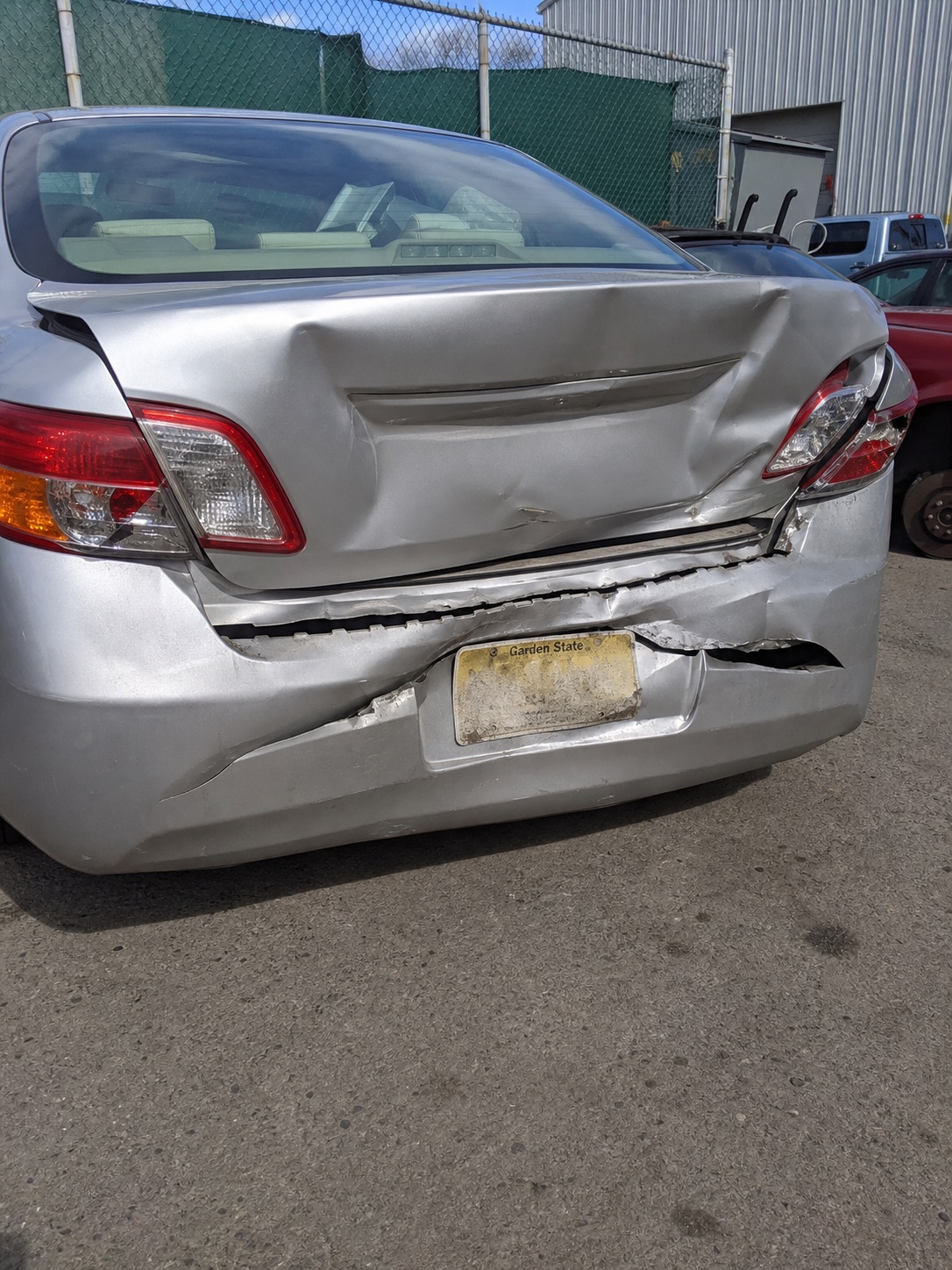
You can preserve a hypothesis without converting it into a fact: write it as a question for review. If someone else's account prompted the hypothesis, attribute it. This separation also applies to vehicle damage, weather and roadway features. A damaged mirror does not establish the whole collision sequence, and a picture of emergency lights does not diagnose an injury. Our illustrations demonstrate those categories, not evidence from an actual event.
Give uncertainty its own wording
A question mark can be more informative than a confident connective phrase. 'I cannot tell which impact came first' identifies the issue. 'Then the second vehicle caused the next impact' may hide a guess. Use words that reflect your knowledge: approximately, before I noticed, after the vehicle moved or reported by the witness.
Avoid treating every gap as a defect to repair. If you looked away, had a blocked view or remember only the aftermath, the limitation belongs in the account. A later document may clarify it. Until then, the timeline should make clear what needs clarification. This is useful for the next reviewer because the unresolved point can be investigated rather than accepted as a fact supplied by the writer.
Correct notes without erasing their history
You may discover that a road name, date or reference number in an early note was wrong. Add a correction with the date and reason. Retain the original where practical so the change is understandable. A correction is not inherently a problem; an unexplained replacement can make it difficult to see how the record developed.
Do not revise your recollection merely because another account sounds more confident. If a report supplies a different detail, identify the difference and the source. If it helped you recognize an actual error, explain that. A file can contain both an original note and a later clarification. The timeline's strength comes from showing the development accurately, rather than pretending that the first version contained information learned much later.
Preserve originals and make working copies recognizable
Keep original files when available. For an image you annotate, retain an unmarked version and label the edited copy. For a letter, preserve enough context to identify the sender, subject and relevant date. A screenshot that shows one sentence can be hard to evaluate when the rest of the message is missing.
Use filenames or folders that help you find the record again, but avoid placing sensitive identifiers in publicly shared filenames. A private index can connect the document to the relevant contact. Do not upload a complete medical or financial archive to a public discussion to get a quick interpretation. Ask an appropriate recipient what is needed and use a verified channel. Organization should improve access for the people handling the matter without making private details widely accessible.
Turn the timeline into a question list
Read the entries and identify what remains unresolved. A discrepancy between an estimate date and a request date may simply require checking receipt. A disagreement about the road or contact sequence may need a different source. List each question separately rather than asking someone to approve the whole timeline as correct.
Before a conversation, select the entries connected to that question and bring the supporting records. Ask what additional information would help. If a person answers only part of the question, record that scope. An answer about when a document arrived does not determine fault, and an explanation of a coverage process does not reconstruct the collision. Keeping the question narrow makes the reply easier to understand and use.
Keep the organizing tool in its proper role
A timeline is an index to events and sources. It cannot establish legal rights simply because its entries look orderly. It does not diagnose an injury, determine a payment or make an uncertain event certain. Review of the actual circumstances remains necessary for those questions.
Use appropriate medical care for health concerns and qualified legal advice for questions about rights or representation. An online inquiry does not create an attorney-client relationship or guarantee an outcome. Your next useful task may be a single entry showing what you received today and what it concerns. Continued accurate additions are more helpful than one polished narrative that turns every missing detail into an assumption.