An official page can still describe a different day
Searching for a collision near Bellmawr can bring up construction announcements, project diagrams and accounts of earlier traffic changes. An official logo makes a document worth examining, but it does not make every detail current. A notice may have described one overnight operation, a proposed stage or an arrangement that has since changed.
Start with two dates: when your accident occurred and when the document says its information applied. Keep them visible. The distinction matters because a search result can place a historical notice beside a recent article without explaining the gap. If the notice does not establish the arrangement on your accident date, use it as background. Do not describe it as evidence that a closure was in effect. A trustworthy accident file makes that limitation easy to see.
First decide which kind of document you have
A study-area map answers a geography question. A traffic advisory answers a more specific question about an announced operation. A design drawing may show a proposed arrangement rather than the one a motorist encountered. A photograph records a scene at the time it was taken, subject to what is visible in the frame. Those materials should not be treated as interchangeable.
Give each item a simple label in your notes: geographic background, dated announcement, personal observation or record received from someone else. You can keep all four without claiming they prove the same thing. For the interchange, NJDOT identifies I-295, I-76 and Route 42 within Bellmawr, Mount Ephraim and Gloucester City. That establishes a corridor. It does not establish the precise lane, ramp or temporary feature involved in your own collision.
Read the location more closely than the headline
A headline may say Bellmawr while the body identifies a particular ramp or direction. Compare the named road with the route you actually drove. A closure affecting a connecting movement does not automatically describe the mainline. The nearest familiar town is also not enough to show that a notice covered the point of impact.
Use your report information and recollection to identify the issue you are trying to clarify. Was the uncertainty about an exit, a merge or which side of a structure you passed? Search material should help answer that narrow question. If the document has a map, keep its legend and date with it. Cropping out those details may make a picture easier to read while removing precisely the information needed to understand its limits.

Create a version record for relevant online material
A link is useful, but websites can move or update their content. For material you believe is relevant, note the page title, issuing organization, URL and the date you accessed it. Preserve the publication date if one is provided. If you save a copy, keep enough of the page to identify what it is and avoid editing its wording.
Your access date is not its publication date. Nor does a footer showing the current year prove that the page describes current operations. If you later find another version, keep the versions distinct. A note such as 'earlier schedule, retained for background' is better than quietly replacing one document and losing the reason it entered the file. This is record organization, not a guarantee that the material will establish any legal point.
Test a claim against the source that supposedly supports it
It is easy for a sentence to become stronger each time it is repeated. A notice announcing barrier work can turn into 'the barrier was incorrectly placed,' even though the first document says nothing of the kind. Before adopting a claim, ask where that specific conclusion appears and what the source actually observed.
The same care applies to your account. Seeing a temporary sign is an observation. Knowing who installed it, when it was moved or whether it complied with a requirement may need other evidence. Keep those questions open rather than supplying answers from the existence of a project. A corridor with construction history does not make every collision a construction-caused collision. Explain the connection you can support and identify the connection that still needs investigation.
Keep personal observations apart from online explanations
Write what you remember before reviewing large numbers of images. Later material can help identify a feature, but it can also make an unfamiliar detail feel remembered. If a diagram helped you identify a road name, say so. Do not present the name as something you read on a sign at the scene unless you actually did.
A passenger or witness may independently remember a different part of the trip. Preserve that person's account with attribution. Do not combine several viewpoints into one story that makes the driver appear to have seen all of them. Our generated corridor and mirror images are illustrations, not evidence from a real accident. They demonstrate why setting, damage and response should be considered separately; they do not fill a missing observation in your file.

Identify what a photograph leaves outside the frame
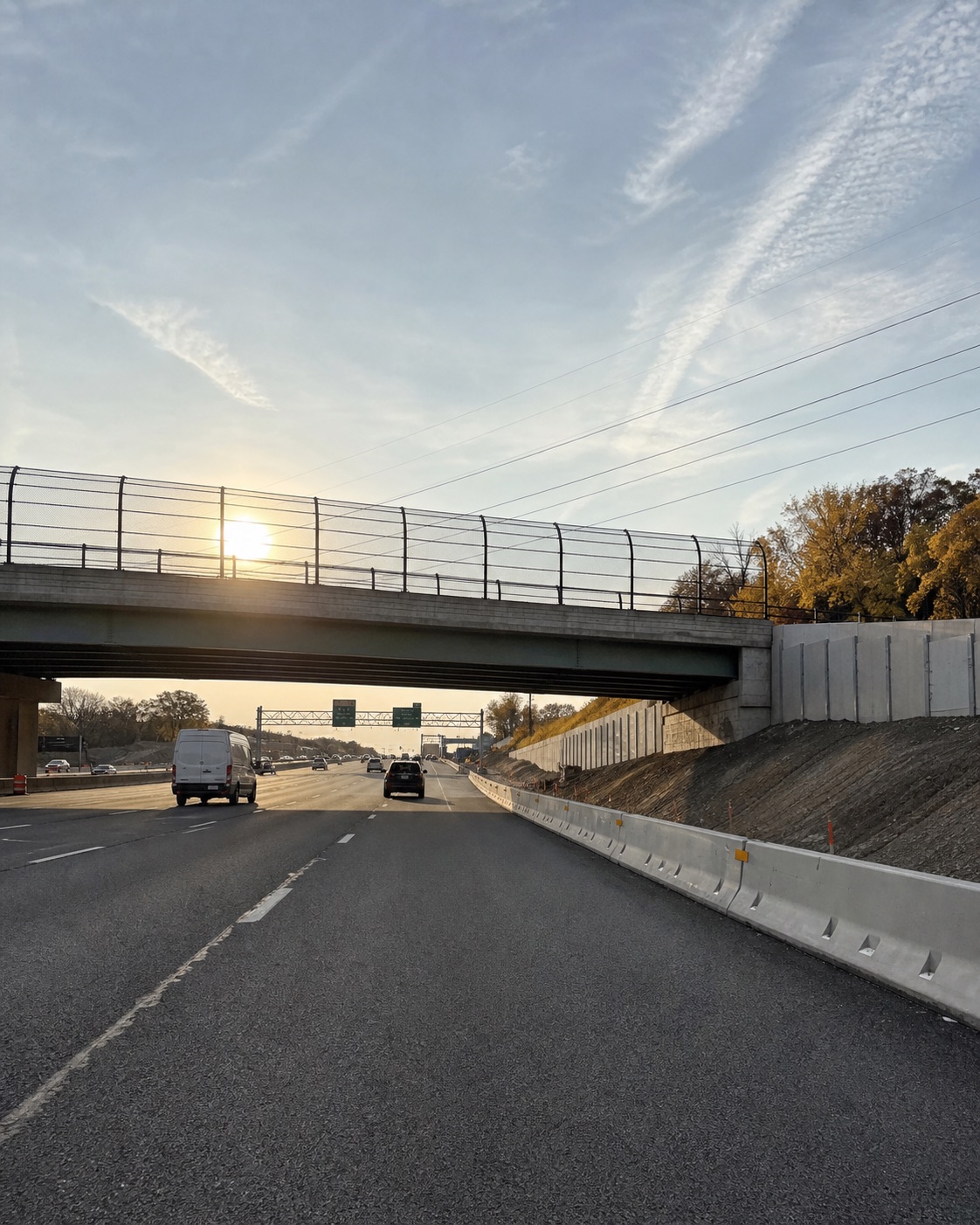
A close image of vehicle damage may omit the road entirely. A wide image may identify an overpass but leave the contact point too distant to see. Neither needs to be discarded because it has limits. Add a short description of what it shows, when it was taken and whether vehicles had already moved.
Avoid using visual drama as a shortcut to conclusions. Emergency lights do not establish the severity of an injury, and a broken mirror does not explain an entire collision. Likewise, a visible barrier does not establish its relationship to the impact without context. Preserve original files when available and avoid adding arrows to the only copy. An annotated duplicate can explain your question while the original remains available for someone to examine independently.
Ask for the missing record rather than the missing conclusion
If the uncertainty is whether a traffic arrangement applied at a particular time, identify that question clearly when speaking with the relevant agency or a qualified professional. If the uncertainty is the ramp location, explain which records disagree. Asking a specific question is more productive than asking someone to confirm that construction caused the accident.
Keep a record of requests and responses, including a response that says the material is unavailable or outside the recipient's role. An unanswered request does not prove the fact you hoped to establish. Do not substitute an unrelated notice just to complete the folder. A useful file can contain a gap. Making that gap explicit helps the next person decide whether another source or a different question is needed.
A careful file is useful without making a legal judgment
Your finished index might contain a location summary, original observations, accident-day records, historical background and unresolved questions. The categories help a reviewer understand how you know each detail. They also prevent an authoritative-looking page from carrying more weight than its date or purpose allows.
This article does not determine whether a contractor, agency or driver bears responsibility. It does not establish coverage or a claim value. Those questions depend on the actual circumstances and require appropriate professional advice. Keep health needs separate from the research task and seek care where needed. For the record itself, the strongest practical habit is simple: preserve what the source says, state what it does not establish and avoid turning the history of the Bellmawr interchange into a conclusion about one collision.