
The pile of papers contains different questions
A treatment bill, repair estimate and letter about responsibility may all arrive after the same accident. It is tempting to treat them as one claim with one answer. A more useful start is to identify the question each paper raises. Medical coverage, vehicle damage and responsibility can involve different discussions and contacts.
This article uses 'tracks' as a filing aid. It does not mean every accident has exactly two claims or that the processes are independent in every circumstance. Start with subject labels that help you locate records. An estimate belongs with the vehicle damage discussion; a treatment billing request belongs with the relevant medical coverage correspondence. If a document overlaps subjects, make a cross-reference instead of assuming the labels decide its legal treatment.
PIP is a coverage description, not an automatic approval
The NJ Motor Vehicle Commission describes personal injury protection as medical-expense coverage for people covered under an automobile policy after an accident, regardless of fault. That broad description answers a terminology question. It does not establish which person, policy or expense is covered in a particular situation.
Ask the representative which policy is being reviewed, what documents are required and which item the response concerns. Preserve the answer with the claim identifier. If a request mentions treatment but you are unsure whether it concerns a bill, records or another document, clarify before sending a full archive. The practical aim is an accurate exchange. It is not to decide coverage from a general paragraph or to assume all costs are approved because the word PIP appears.
Responsibility and medical coverage are different subjects
A discussion about how the collision occurred asks a different question from where a medical bill should be sent. Liability coverage broadly concerns losses for which an insured person is responsible. That description should not be treated as another name for the PIP discussion. Keep the subject visible in your notes.
If someone asks about the sequence, provide your actual account with its limits. If someone requests billing material, identify the record requested. An answer in one conversation may not resolve the other. Do not infer that a medical coverage process decides fault, or that a disagreement about responsibility automatically explains every billing issue. Policy terms and circumstances matter. The filing distinction is intended to prevent subjects from being confused, not to supply a legal conclusion.
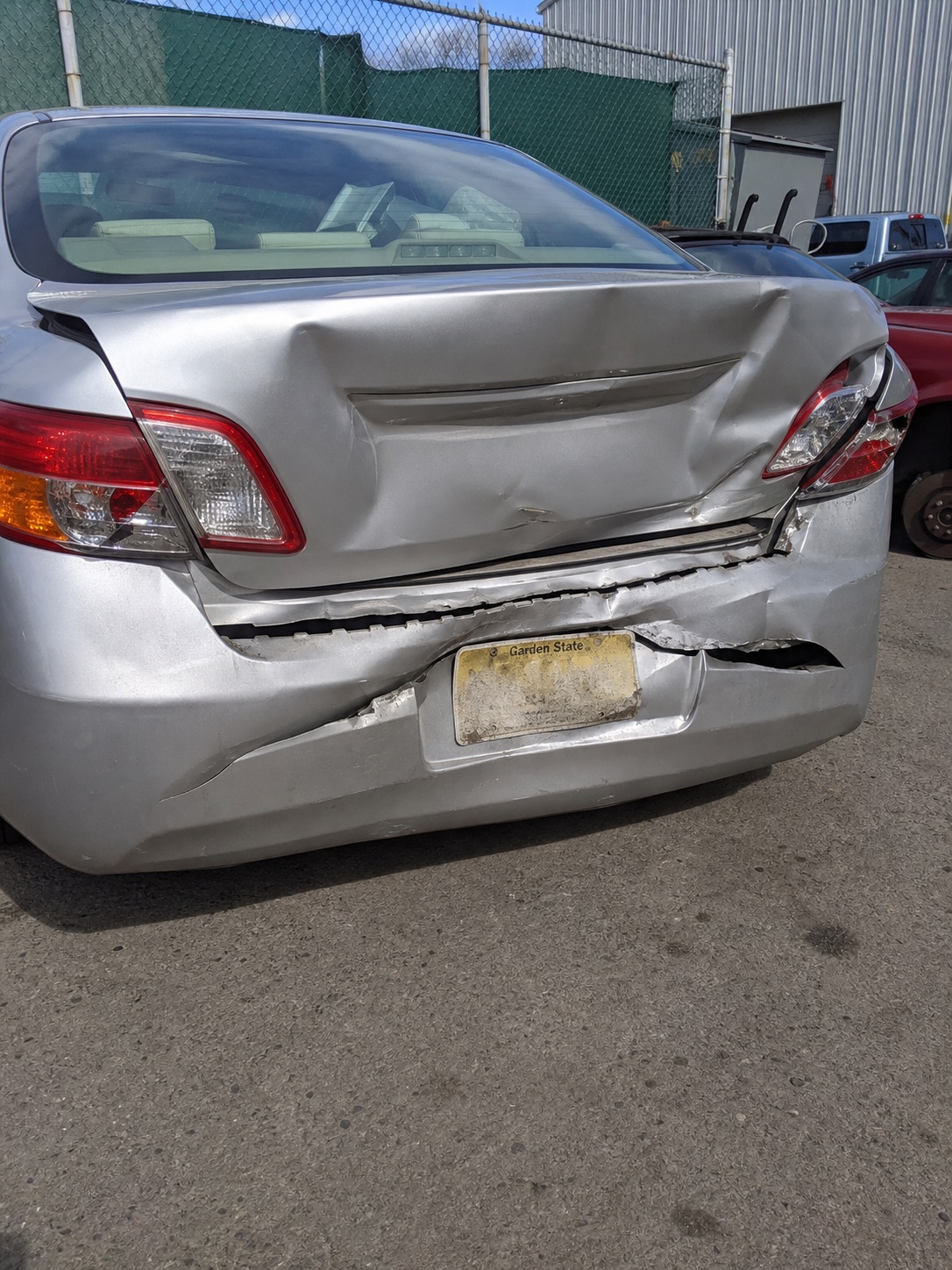
Vehicle damage deserves a third folder when needed
NJ DOBI explains that PIP does not pay for vehicle damage. Its consumer guide distinguishes an own-insurer vehicle damage claim using applicable collision or comprehensive coverage from a claim against another driver's insurer. Those descriptions explain why an estimate should have a clear vehicle damage label.
Ask which coverage and file the representative means before sending the estimate. Retain photographs as records of what they actually show, not as a substitute for an assessment. The generated bumper image here is illustration, not a valuation of a real repair. The damaged mirror and emergency lights also establish nothing about benefits or fault. Separate visual material, proposed repairs and written coverage explanations so a person reviewing the file can find the relevant question.
Make an index that identifies contacts as well as subjects
For each track, list the company, contact, claim reference and outstanding question. Different organizations may use different numbers for the same accident, and one company may have more than one subject under discussion. Label a number by its source instead of assuming everyone recognizes it.
The index need not include copies of all sensitive documents. It can point to where they are stored privately. If a request crosses subjects, identify the requested item and destination. A record sent for one purpose should not be assumed to have reached every relevant contact. Ask how receipt will be confirmed. This small structure can prevent repeated calls from beginning with a search for which person asked for which file.
Track a document through the exchange
An organized entry can show the request, submission, confirmation and unresolved response. These are separate stages. Sending a file does not establish that it reached the correct record, and confirmation of receipt does not establish approval of coverage or payment. Keep the actual status visible.
If the same document is requested again, ask whether the earlier version arrived and whether the new request differs. Do not assume duplication proves that someone lost the file. There may be another subject or contact involved. Conversely, do not send an entire folder simply to be sure. Verify what is needed and use the appropriate channel. Preserve the original and the submitted copy where they differ, so later discussions can identify what the recipient actually saw.

Resolve an apparent contradiction by comparing scope
Two answers can sound inconsistent while addressing different questions. One may discuss a vehicle estimate, another a medical billing item. One may refer to an earlier policy version or facts different from those in the later request. Compare the subject, source documents and information supplied before assuming the responses directly conflict.
When a real discrepancy remains, state it narrowly and ask for clarification. Preserve both written explanations. A useful question identifies the sentence or item that is unclear rather than claiming that every part of the file has been decided incorrectly. This approach helps a representative or professional answer the actual issue. It does not require you to settle the interpretation yourself or turn a telephone summary into the full policy position.
Keep private information on a need-specific path
Medical records, personal identifiers and policy papers can contain details unrelated to the immediate request. Confirm who is asking, why the material is needed and which channel should be used. An ordinary analytics event, public forum or open image gallery is not the place for the contents of a claim file.
If an intake service is the first point of contact, check its disclosures about recipients before sending sensitive attachments. A request for help can begin with basic circumstances and the question you want addressed. More detailed material can be discussed through an appropriate process. The paperwork illustration here contains blank documents; it is not a model file to reproduce on a dashboard. Actual records belong in secure storage and carefully verified exchanges.
Use the tracks to support a qualified conversation
Bring the index and the documents connected to the issue you want reviewed. Ask which track the professional is discussing and what remains necessary to answer it. You do not need to combine every letter into a single account or choose a settlement estimate to explain why you want help.
The categories in this article organize correspondence. They do not establish benefits, fault or a particular result. Coverage depends on applicable documents and circumstances; legal questions need qualified advice. Health concerns should receive appropriate care. An online inquiry does not establish representation or guarantee recovery. A useful first step can be as simple as separating a repair request from a treatment bill and recording the appropriate contact for each. Clear labels keep the next discussion grounded in the right question.