Begin with the question the photograph is supposed to answer
A photograph can look convincing before anyone explains what it records. You recognize the elevated roadway, see a damaged car and feel that the scene is clear. But recognition is only the beginning. Did the image show the first contact, the place the cars stopped or the vehicle after it reached a storage yard? Those are different records, even when they all relate to the same trip.
After a Pulaski Skyway collision, a useful first question is not “Does this picture prove my account?” It is “Which part of my account can this picture actually help explain?” Location, visible damage and final position may each need a different image. Do not return to an exposed road to fill a gap in the collection. If there is an emergency, seek immediate help and follow responders’ directions. Organizing the record comes afterward.
Recognizing the Skyway is different from locating the impact
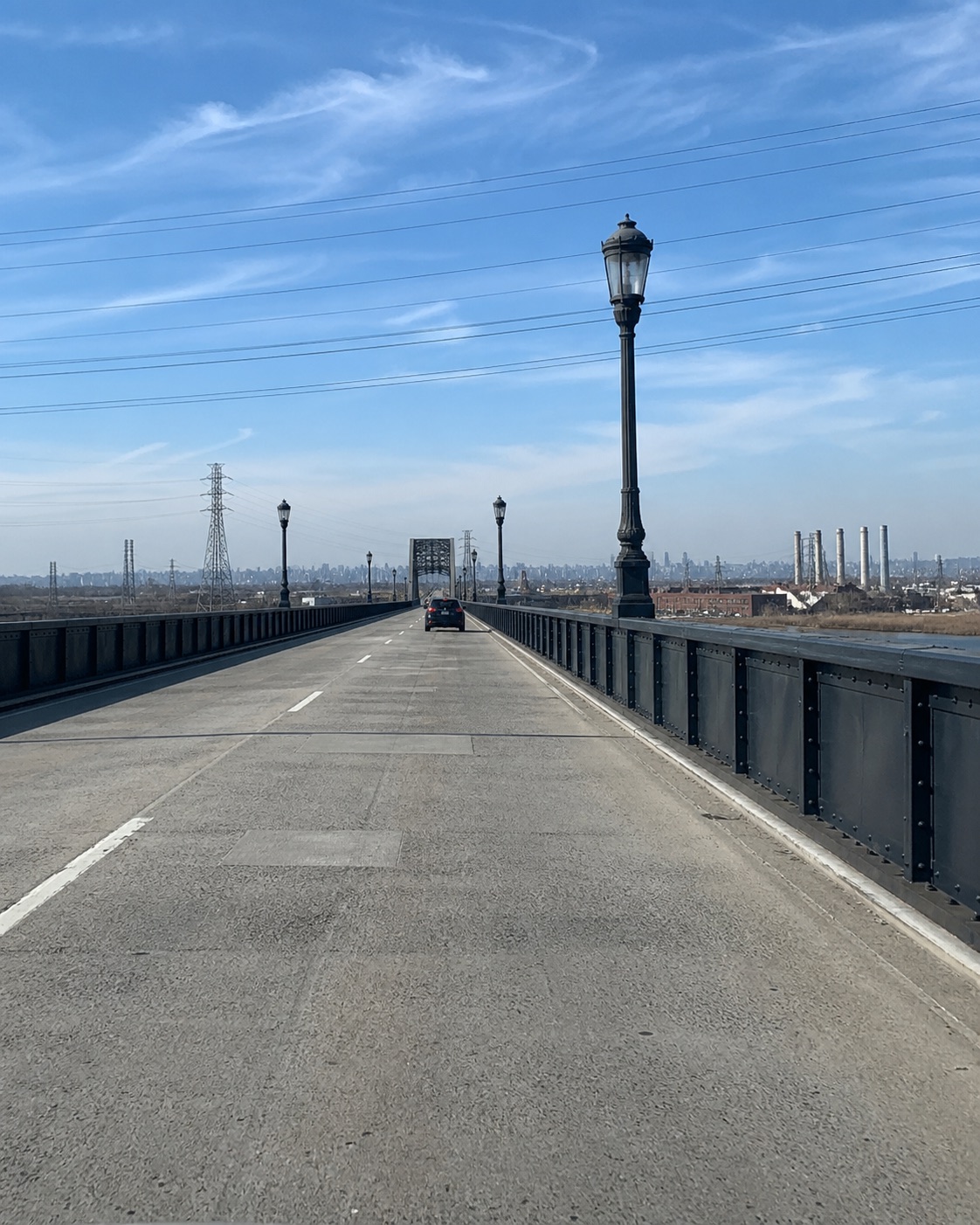
NJDOT describes the Pulaski Skyway as part of Route 1 & 9, linking Jersey City, South Kearny and Newark. That stable geography helps identify the corridor. It does not identify a particular collision from a generic road view. An image with a recognizable structure may have been taken before the trip, after the collision or along a different part of the approach.
Write down the last place you can confirm before contact, the approximate impact location and the stopping location. Keep uncertainty visible. If you checked a map later, say so. A map result is a later reference, not a recording of where the car was at the instant of impact. Likewise, an older NJDOT project photograph can explain the setting while leaving the current signs, access arrangements and traffic unanswered. Do not use a historical view as a present driving instruction.
Create a short source note for each important image
For each useful photograph, note who made it, how you received it and what you know about when it was taken. You may have the original phone file, a copy sent by a passenger or a screenshot of someone else’s message. Keep those distinctions. A screenshot can preserve a conversation while losing the surrounding information contained in the original photograph.
There is no need to build a complicated database. A sentence beside the file can be enough: “Received from the passenger that evening; said to show the stopping place.” If you do not know the photographer or date, record that limit. Do not silently turn an unknown image into your own observation. Retain the original file when available, and keep a backup before adding arrows or changing a name. The note explains the record; it should not replace it.
Separate visible position from the sequence of contact
A car behind another car in a photograph establishes a visible position at that moment. It does not automatically establish the order of every earlier impact. Vehicles can move, be directed to a safer stopping point or be repositioned for removal. Describe the image as a picture of the position it actually shows, rather than making it stand for the entire collision.
Your own sequence may begin with a sound or movement you felt, especially if you could not see the approaching vehicle. Save that recollection separately. Write what you noticed before the first contact, what happened during it and what you perceived afterward. If there were several contacts, avoid combining them because the final damage looks like a single event. An incomplete sequence with clear limits is more useful than a confident explanation assembled from a later photograph.
The mirror view belongs to one observer
A driver may see a vehicle in a mirror while a passenger watches a road sign. Another passenger may not be looking outside at all. A view from one seat cannot supply everyone’s missing observations. If several people have relevant recollections, each can write an account before comparing details. Keep their words and positions distinct.
For a mirror or camera view, ask what was within its field of view and what was outside it. A vehicle disappearing from the image does not necessarily tell you where it went. A reflection may also make orientation difficult. Preserve a full video if you have legitimate access to it, rather than keeping only a short clip selected for sharing. Notes can explain why you selected a segment, but the selection itself should not alter the underlying sequence or hide the limits of the view.

Dates attached to files need their own explanation
The time a picture was received is not necessarily the time it was taken. The time you uploaded it is another event again. Keep the original file and any relevant message together so you can explain those differences. If you are unsure what a timestamp represents, label it as uncertain instead of treating it as the exact collision time.
The same care applies to a photograph taken at a repair shop. It can show the condition of the vehicle when photographed without establishing when each mark appeared. If the vehicle was moved or handled before that photograph, note what you know about the interval. Do not invent a history for a scratch or missing part. Ask appropriate contacts for available records, and preserve their response. When obtaining evidence involves a dispute or a formal process, seek individual advice rather than assuming a page can determine what another party must provide.
Make the document trail readable to someone who was not there
Keep the vehicle removal details, inspection correspondence and estimates in one part of the folder. Keep attention documents and related questions in another. For each communication, record the company, person, date and claim number. That lets a reader distinguish a photo request about repair from a separate conversation about an injured occupant.
The MVC describes PIP as a medical expense coverage for people covered under an automobile policy. That general category does not resolve the coverage for a particular person or expense. Ask which coverage and which document are being reviewed. Confirm the recipient through a known channel before sending private files. A receipt confirmation establishes that an attachment arrived; it does not show that the account, coverage or payment was accepted. Save the actual response rather than paraphrasing it as a wider decision.

Questions a careful reader should still be able to ask
Does a familiar Skyway picture identify the collision location? It may help recognize the corridor, but it needs a source, time and connection to the actual event.
Does a final position identify the first impact? Not necessarily. Keep movement and stopping details separate.
Should I remove a blurry photograph? Preserve the original collection before deciding what is useful. A reference visible in an imperfect image may matter later.
Can an old project image explain current lanes? Historical material should be dated and used within its limits. It is not a current traffic report.
Does a timestamp settle the exact time? First establish what event that timestamp records. Receiving, copying and uploading can occur later.
Does gathering these records decide fault? No. This article helps describe the evidence available; it does not determine responsibility or the outcome of a claim.
A practical note to place beside the folder
Write a short summary that identifies the corridor, approximate impact point, stopping place and the people who observed each part. List the strongest images with their source and known time. Mark later photos, annotated copies and missing originals. Add the vehicle’s removal or inspection history only to the extent you can confirm it. A reader should be able to see both the information and the unanswered questions.
For the next conversation, choose one gap to address: an original photo, a removal destination or the meaning of a document request. Keep a copy of what you ask and what comes back. Injuries Cases Journal provides general editorial information. It does not give legal or medical advice, establish attorney representation or promise compensation. For a document affecting rights or a specific dispute, bring the complete records to a qualified professional who can review the circumstances.