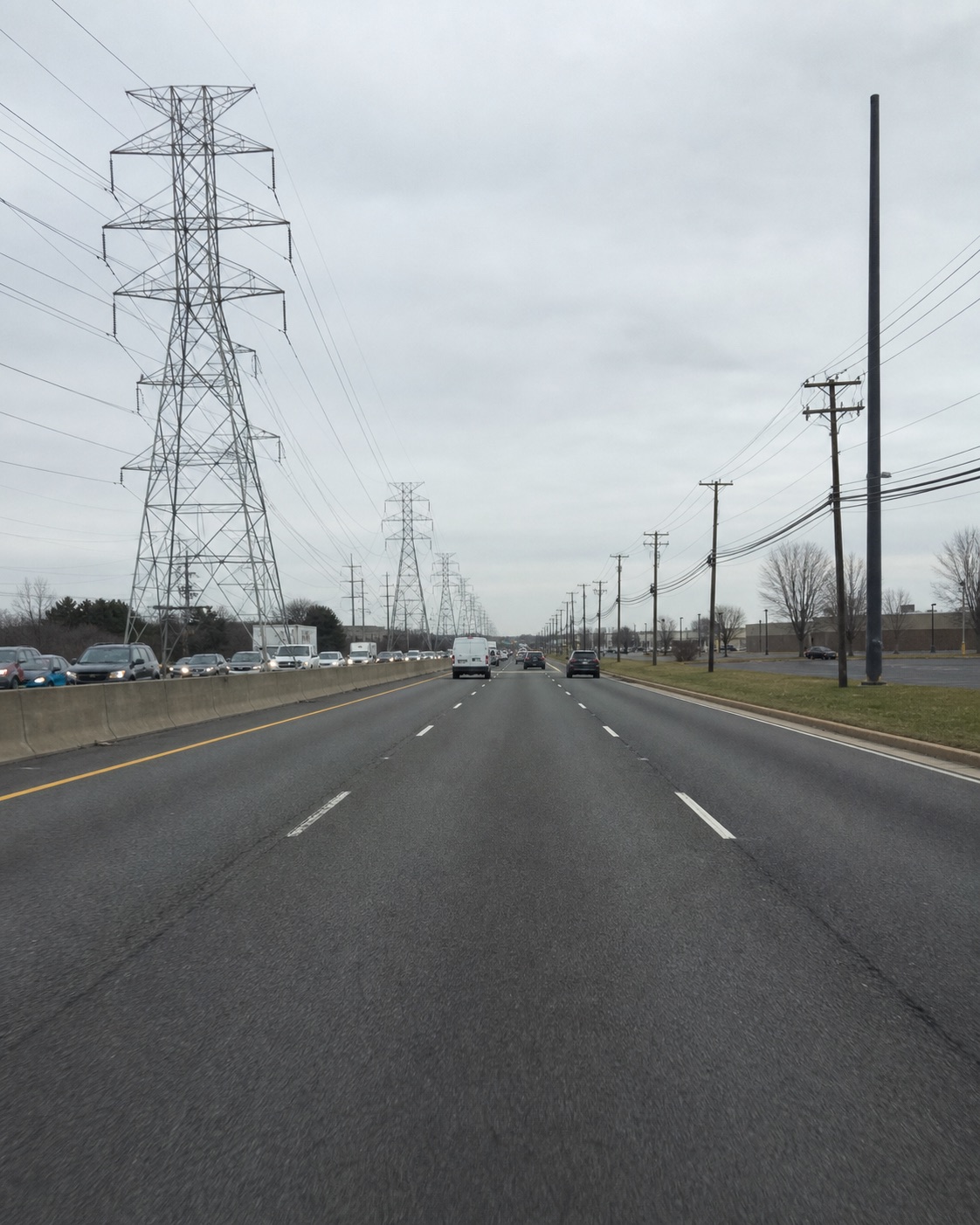
Start with the detail you are trying to establish
After a collision near Route 1 in Edison, a familiar business or street name can make a location feel settled. Then you open the photographs and realize they show the place the car stopped, while your note refers to an access you intended to take. Both records may be useful. First decide which detail you are trying to establish: the route, the access, the point of contact or the later stopping place.
Keep a short list of those questions beside the folder. A photograph may answer one while leaving the others open. You do not need to make the collection look complete before someone can read it. If you are still dealing with an emergency, seek immediate help and follow responders’ directions. Do not return to an exposed road to improve the record. The work described here is for a safe place afterward.
What the official Edison road diagram can contribute
NJDOT’s US 1 straight-line diagram identifies Edison Township in Middlesex County. The Edison portion includes references such as Plainfield Avenue and Old Post Road. Its inventory date is May 2018. Those details provide geographic background and names to investigate when they match the trip. The diagram does not establish which access you used or the arrangement of traffic on the collision date.
Save the source URL, the relevant page and the reason you consulted it. For example, you may use it to check a remembered street name rather than to describe a lane. That small explanation prevents a large road reference from being treated as a record of the event. If you cannot connect a reference to an original image or recollection, keep the connection open. For a new journey, use current official travel information instead of a historical inventory.
Give a remembered access its own temporary label
You may remember a curved connection without knowing its street name. A temporary description such as “access after the last confirmed sign” can preserve that memory while you look for a better reference. Keep the label visibly approximate. Do not borrow the name of a nearby jughandle simply because it appears to serve the same destination.
A sketch can show where you thought you were, the movement you recall and the stopping point. Date the sketch and explain that it was made from recollection. If you later identify the access, add the basis for that identification. Keep the earlier sketch as well, so the record shows how your understanding changed. The intention to turn, the start of a movement and the position at contact remain separate details even after the access has a confirmed name.
Trip messages explain the plan and the later interruption
A message about collecting someone, visiting a business or arriving late may help explain why you were traveling through Edison. Preserve the conversation with its dates and context. The destination is a useful part of the trip history, but it does not independently record the road taken or the point of contact. You may have changed the plan before the collision.
Likewise, a message sent afterward can show when you told someone about the interruption. It may help identify a period without giving the exact impact time. In your summary, describe what the message actually records. If a map was calculated after the event, identify it as a later reference. This lets a reader use each item for a clear purpose instead of treating every reference to the journey as a trace of the same movement.
Find out where each photograph fits in the access sequence
For a useful photograph, note who took it, where it was made and how you received it. Separate views of the road, the stopping place and the vehicle at a later location. A photo containing an entrance can help with orientation while leaving unanswered whether that entrance was used before contact. A familiar storefront also needs a connection to the actual trip.
Preserve original files and the messages through which you received copies. If you highlight a mark or add an arrow, keep the original alongside that working copy. An arrow represents your explanation; it is not part of the scene recorded by the camera. A full available video may help establish a sequence that a still image leaves open. Retain the surrounding footage when you can legitimately preserve it, and record the limits of its view.

Record observations at the level the person actually made them
A passenger may have seen the access sign while the driver remembers a movement of the vehicle. Someone looking at a phone may only have felt the contact. Give each observation its observer and position. A short account can say what was visible, what was felt and what was learned from another person later. That is more informative than a combined statement with no sources attached.
When people compare recollections, keep the original notes and date any additions. A detail learned during that discussion can be recorded as later information. Avoid rewriting every account so the group appears to have made the same observation. The purpose is to preserve the information available for review, including its limits. You can also retain a witness’s contact privately without publishing their number or asking them to adjust their memory to a preferred version.
A source note makes follow-up questions easier
Beside each important item, write three things: where it came from, the event it describes and the question it leaves open. An original road photo, a copied message and a historical diagram can then sit in the same folder without appearing to have the same status. Missing information should be a visible entry, such as “photographer not yet confirmed,” rather than something silently assumed.
If someone requests documents, keep the request and your response with the relevant files. Identify the contact and the specific item supplied. A complete record of that exchange can explain what material was available at a particular point. Keep private information in a controlled folder and confirm the recipient before sharing it. If obtaining a record requires a formal process or affects legal rights, seek an individual review rather than assuming this article establishes what another person must provide.

Questions worth leaving visible on the first page
Which part of Route 1 is confirmed by an original reference? List that reference and how it was identified.
Which access is recalled but still unnamed? Keep an approximate label until a source supports a more precise description.
Does the trip message describe a plan or an observed location? State its purpose and time.
Was the photograph made before or after the vehicle moved? Explain the known interval and leave the rest open.
Who observed the sign, the movement or the contact? Preserve the source of each detail.
What changed when a later document arrived? Date the addition and keep the earlier note. These questions help the reader understand the collection without requiring you to produce an immediate answer to every part of the collision.
Prepare a record someone else can read without your commentary
Put the road reference, approximate access and stopping location on one page. Underneath, connect each statement to a recollection, image or document. Mark later checks and unresolved links. A reader should be able to see why you identified a place and where that identification remains tentative. Keep the originals available behind the summary, including records you chose not to emphasize.
For the next step, choose one question that can be checked: the source of a photograph, a street name or the date of a message. Save the answer with its origin. Injuries Cases Journal provides general editorial information about organizing records. This guide does not reconstruct a particular crash, give legal or medical advice or promise a claim result. For a disputed fact or a document affecting rights, bring the complete collection to a qualified professional for individual review.