A date in the folder may answer a different question
A collision folder can contain a road diagram, an appointment message, a photograph and an insurer’s letter. Each has a date, but those dates describe different events. The diagram’s inventory date, the planned appointment time, the photo’s creation time and the letter’s issue date should not be treated as a single accident timeline. Begin by asking what event each date belongs to.
If there is an emergency after a Route 18 collision, get help and follow responders’ directions. Gathering documents should not delay needed attention or put anyone back in traffic. Once safe, write the road and direction you remember, the approximate contact location and your role in the trip. An account can start with uncertainty. A later document should help clarify that uncertainty rather than make it disappear without explanation.
The official diagram locates the road, not today’s traffic
NJDOT’s Route 18 straight-line diagram identifies New Brunswick City in Middlesex County. The diagram used for this guide is a historical road inventory dated May 2016. It supports that geographic reference. It does not establish current lanes, closures, signs or work areas. A different project page concerning East Brunswick should not be used to describe New Brunswick merely because both involve Route 18.
When using a road source, note its title, date and the specific point it supports. A document may answer “Does this corridor pass through New Brunswick?” without answering “How was traffic arranged that afternoon?” If your collision location is only approximate, preserve that limit. The present article and its illustrations are not navigation instructions. For another journey, use current official travel information rather than relying on a historical inventory or an image accompanying an article.
Keep the journey you planned separate from the road you confirmed
An appointment, shift or pickup message can explain why you were traveling. It does not establish every road used or the moment of the collision. You may have planned one route and taken another. Record the last confirmed reference and the destination as separate fields, rather than drawing a route that assumes you followed the original plan exactly.
If a map or application contains relevant trip information you can legitimately access, preserve the available record and note when you obtained it. A route calculated afterward is a later suggestion, not a track of the original drive. Likewise, a message saying you were running late may narrow a period without supplying an exact impact time. These limits do not make a document useless. They explain the kind of question it can help answer.
An incorporation or exit needs an observed sequence
If the contact involved approaching an exit or joining traffic, describe the movement you actually remember. Intended direction, started movement and final position are not identical. A driver may know they planned to leave Route 18 without recalling whether the car had begun moving toward that exit. Keep that distinction rather than selecting the version that fits a photograph.
Ask what each occupant could see. A passenger may remember a sign but not the position of another vehicle. Someone may feel the first contact without seeing its source. Write each observation with its observer and approximate point in the sequence. If several contacts occurred, do not collapse them because a later document uses a short phrase such as “the accident.” That phrase can refer to the event broadly while leaving the order of movements unanswered.
The photograph’s scene and its date belong together
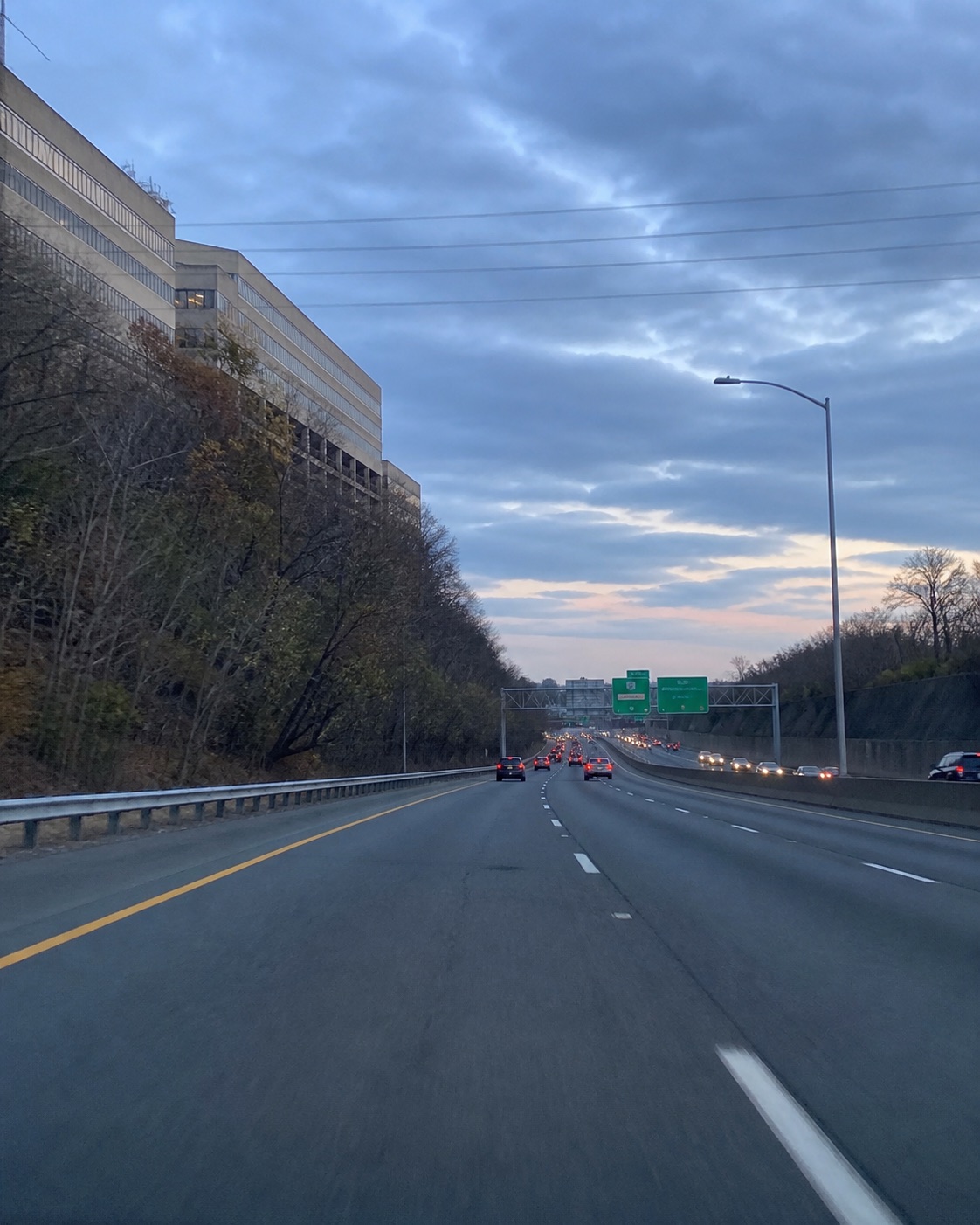
A photo can show a road reference, damage or the place where the car stopped. Preserve what you know about when and where it was made. A photograph from a storage yard is not a scene photograph, even if it was taken on the same day. A later road view should be labeled as later, and should not establish conditions at the collision time by implication.
Keep the original image and relevant message if someone sent it to you. Copying, receiving and uploading can each create another date. If you do not know which date you are looking at, mark that uncertainty. Do not alter a file to make it match an estimated time. An annotated copy can highlight a detail, but retain the original so a reader can distinguish the underlying image from your interpretation.

Documents from before and after attention need their own roles
An appointment arranged before a trip and a document issued after a collision can both be relevant, but they do not demonstrate the same thing. Keep each in its proper sequence and describe its purpose. Avoid placing them together under a label that implies both arose from the collision when one already existed. A clear explanation is better than a folder order that silently suggests a connection.
For health questions, seek an appropriate professional evaluation. This article cannot explain symptoms or determine how a condition relates to an accident. Preserve the documents you receive and separate them from vehicle photographs and repair estimates. If another person helps with transport or removal of the car, consider which files they actually need. Their assistance does not require access to an entire private attention record.
The claim timeline begins with communications, not assumptions
For insurer communications, note the company, person, date, claim number and question discussed. Save instructions and the documents actually sent. A request for an estimate may concern vehicle damage while a separate request concerns an occupant. Do not give a letter a broader meaning simply because it mentions the same collision date.
The MVC explains that PIP relates to medical expenses for covered people under an automobile policy, distinct from other coverage categories. That background helps frame questions; it does not determine coverage for your circumstances. Ask what is being reviewed and what remains pending. Verify the recipient before sharing private records. A document receipt is not a decision about fault, coverage or payment. Preserve the full wording when a response arrives, especially if a short summary might obscure a condition or an unanswered question.

Questions about dates and location references
Does the diagram date show when the road last changed? Not necessarily. An inventory date should not be treated as a complete history of every later road arrangement.
Can an East Brunswick project explain a New Brunswick collision? Only material relevant to the actual location, date and question should be used. A shared route number is not enough.
Does my appointment time establish the impact time? It records a planned event. Use it within that limit.
Should a later photograph be excluded? It may show something useful if identified as later. Do not describe it as an image of the initial scene.
Can I use an upload date as the camera time? Clarify what the date represents first.
Will a precise timeline guarantee a result? No. Accurate organization supports a review without deciding its outcome.
Make a timeline that explains how you know each entry
Create a short timeline with four fields: event, date or approximate period, supporting record and remaining uncertainty. An entry might refer to a planned trip, a remembered impact, vehicle removal or a later document request. Keep approximate times approximate. Place road background in a separate reference section so its publication date is not confused with the sequence of the collision.
Then choose one missing item to ask about, such as the source of a photograph or the meaning of a claim letter. Record the response without changing earlier observations to match it. Injuries Cases Journal provides general editorial information, not legal or medical advice. It does not establish representation or promise compensation. If the records concern a dispute, rights or an agreement, bring the complete material and the unresolved gaps to a qualified professional for an individual review.