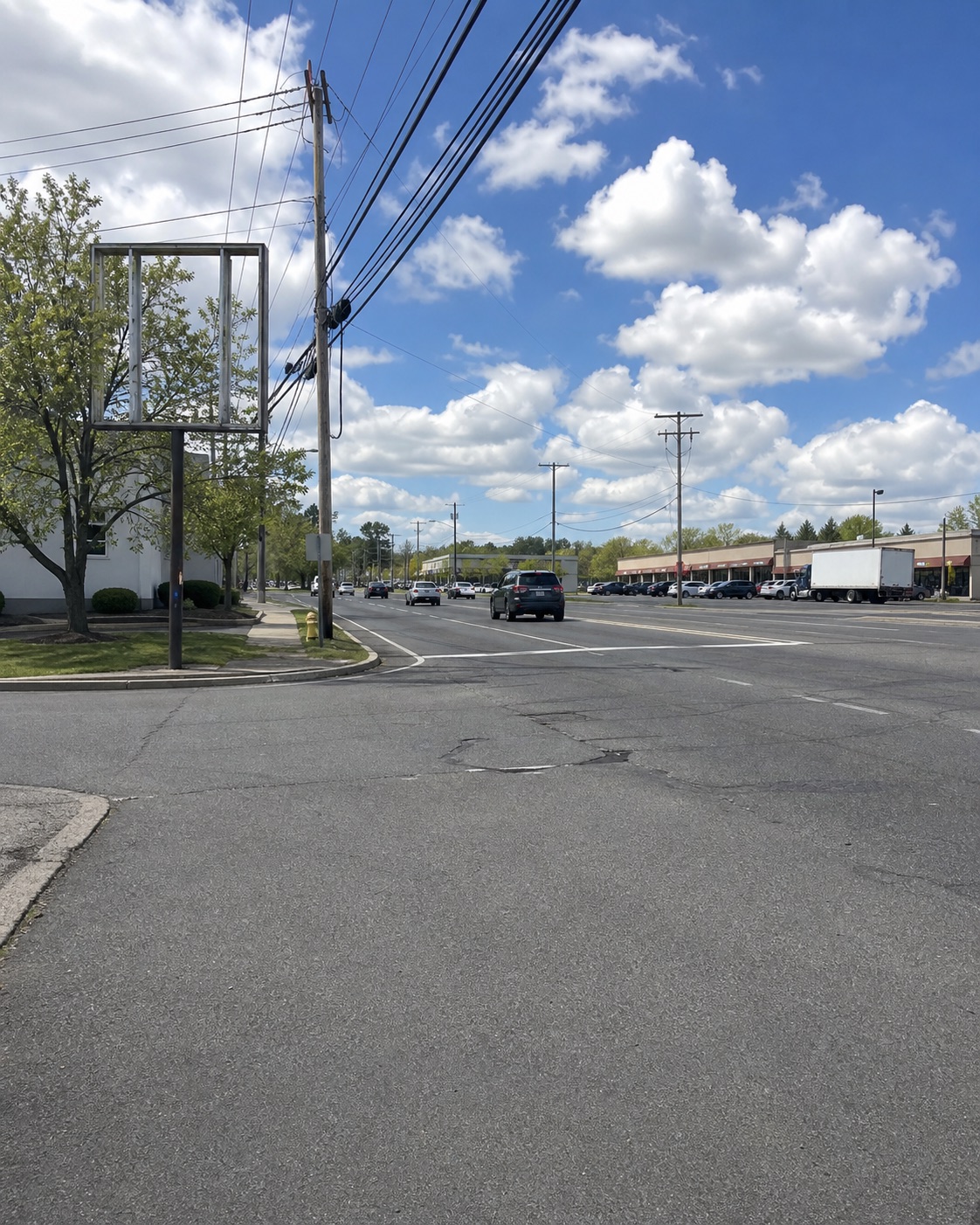
One familiar address can hide several different places
A driver remembers a business, a passenger remembers a signal and a photograph shows a parking entrance. These details can all concern the same trip without identifying the same point. Along a commercial road, a business name may be useful orientation while leaving the exact movement and contact location uncertain. Start by separating those questions rather than compressing them into an address.
If there is an emergency, call for help and follow responders’ directions. Do not cross Route 70 to collect a photograph or inspect another vehicle. Once safe, record the road, direction and reference you actually remember. A later search for the business may help locate it, but it should be labeled as a later check. The goal is a record that explains how each location was identified, not a map that appears more precise than the underlying information.
Use the official corridor description at the right scale
NJDOT’s Route 70 corridor page describes a project between Route 38 and Cooper Avenue through Pennsauken, Cherry Hill and Evesham. That is useful geographic background for a long corridor. It does not show where a particular car turned, which entrance an occupant meant or what arrangement existed on the collision date. The project material also contains dated construction information, which should not be treated as a current closure report.
For a Cherry Hill account, identify the local reference that connects your record to the trip. It might be a street name, a confirmed address or a sign visible in an original photograph. If that link is missing, say so. Avoid transferring a diagram of one intersection to another because the businesses or road layout seem similar. A source can be accurate about the corridor and still be too broad for the question you are trying to answer.
Give each entrance or movement its own description
“Leaving the store” may refer to getting into the car, moving within the lot or entering the road. “Turning in” might mean looking for an entrance, waiting near it or already beginning the maneuver. Use a short description of the movement you observed. Do not infer the phase from the reason for the trip.
A simple sketch can separate the road, the entrance and the stopping point. Label it as a sketch from recollection, with approximate positions. If you add an address found later, keep the date and source of that check. Do not give uncertain distances the appearance of measurement. Where two entrances serve the same property, confirm which one is being discussed before comparing accounts. That clarification may be more useful than collecting another photograph of the business sign.
Who saw the signal, and at what moment?
A signal appearing in a photograph is one fact. Its color at the instant of contact is another. A person may remember that traffic was moving without having looked directly at the signal. Preserve that distinction in the note. You can write what you observed without supplying a light color simply because it would make the account easier to explain.
Ask each observer what was visible from their position. A passenger looking toward an entrance and a driver looking ahead may have different information. Do not make one person’s recollection appear to be shared by everyone. A later conversation can be recorded as a later conversation. It should not overwrite the original account as if that detail had been known from the start. This is a way to describe the record, not a procedure for determining which person was responsible.
A storefront camera is a possibility, not a record you already have
A business may have a camera without it covering the entrance or preserving footage from the relevant time. If you ask about video, record who you contacted, what location you described and what they said. A response that someone will check is not confirmation that a useful recording exists. Do not list “store video” as available evidence until that is established.
Ask for the appropriate contact and procedure rather than assuming staff must give you a copy. Where access or preservation involves a formal request, seek individual advice. If you receive a file, retain the original and any explanation of its source, time and field of view. A camera clock may also need clarification. Keep a complete available sequence so a short selection does not make a later position look like the initial movement.

Read photographs made after the vehicles moved
A photograph taken inside a lot after a collision can show visible damage and final surroundings. It may not show the place of contact. Label it accordingly. If the cars were directed elsewhere, note who provided the direction and what you remember about the move. Keep an unknown part of that sequence open rather than assuming there was no movement.
For damage images, distinguish the photographer’s observation from a workshop’s later assessment. A photo shows an appearance; an estimate describes proposed work. Neither alone supplies the full history of every mark. Retain estimates with dates and versions, including later changes. If someone annotates a photo, preserve the original separately. A colored arrow can help a conversation while also suggesting a conclusion that the unmarked image does not itself establish.
Match the request to the document before sending it
A contact may ask for a photo, an estimate, a report or an attention document. Ask which claim and which issue the request concerns. Keep the recipient, date and instructions beside the copy you send. If several people occupied the vehicle, check whose document appears in the attachment. A shared trip does not make everyone’s private records interchangeable.
The MVC distinguishes PIP and other automobile coverage categories. Its general explanation is a starting point for questions, not confirmation that a particular expense will be paid. Ask the insurer which coverage is under review and what remains missing. Use a verified channel for private documents. Receiving an attachment, reviewing coverage and making a payment decision are different steps; record the actual answer without expanding it into an approval that has not been given.

Questions to keep open when reading the folder
Does the business name identify the entrance? Sometimes it is only a broad reference. Confirm the specific place before comparing accounts.
Does moving traffic establish the signal color? It describes an observation, but it is not the same as seeing the signal at contact.
Does a camera on the building mean there is footage? No. Coverage, retention and access need to be confirmed.
Can I combine everyone’s recollections into one statement? Keep the source of each observation clear, including what each person could not see.
Is a repair estimate a final decision? It can be one document in a review; retain its date and later versions.
Will a complete folder prove a claim? Organization makes the material easier to understand. It does not decide fault, coverage or compensation.
Prepare a one-page guide to the records
Put the approximate location, direction, entrance reference and movement description at the top. Below, list which person observed the signal, the vehicle positions or the stopping point. Link those observations to the available files, with dates and source notes. Distinguish requested footage from footage actually received. Mark photographs taken later and preserve annotated copies separately from originals.
Choose a specific next question, such as confirming the entrance or asking what an insurer still needs. Keep the response complete. This article from Injuries Cases Journal is general editorial information, not a reconstruction of a real collision or a guarantee about a claim. For a disputed fact, an agreement or legal rights in your circumstances, seek an individual review. Bring the original material and the gaps alongside the summary, so the review is not limited to your selected interpretation.