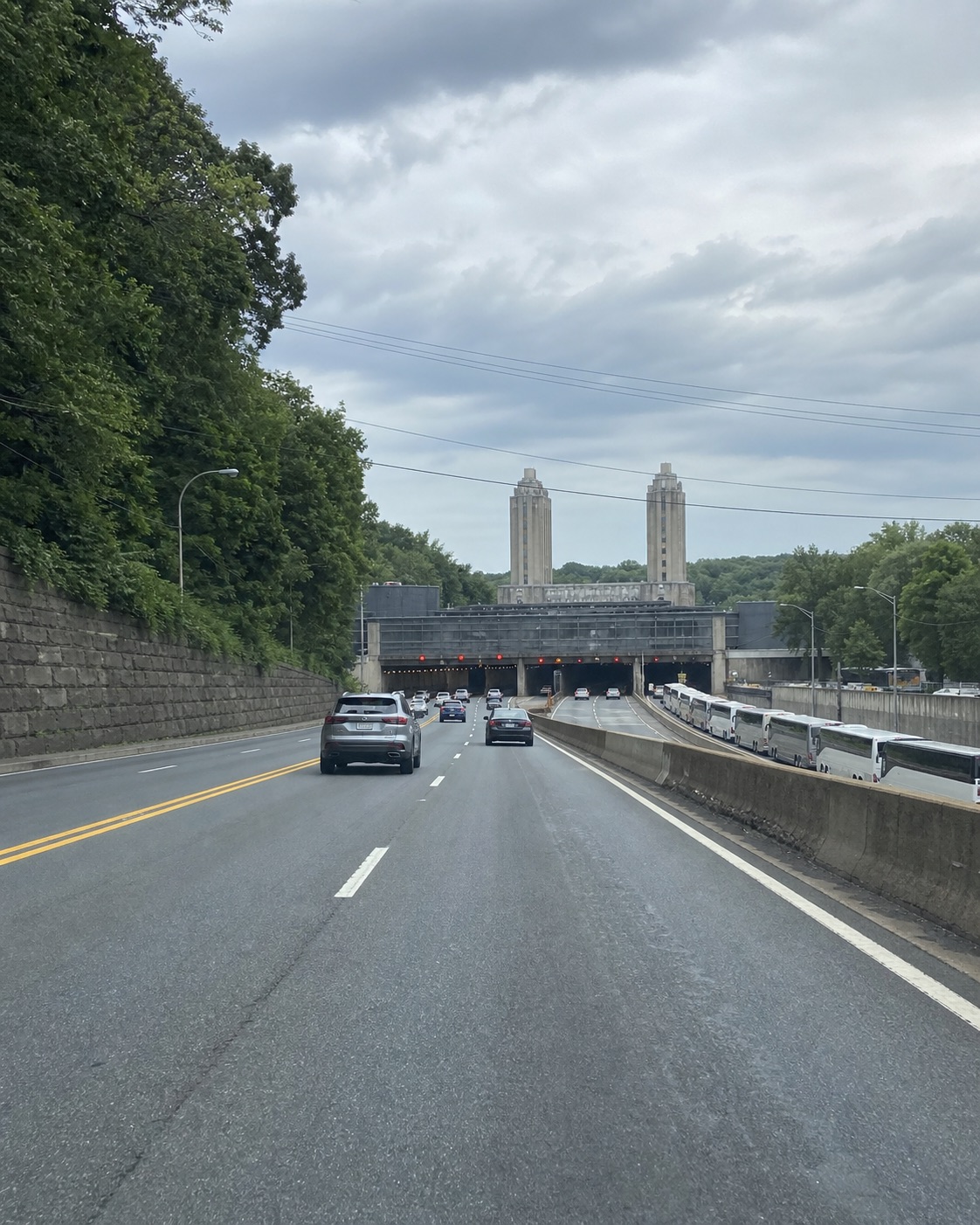
Compare the questions behind a toll record, message and photograph
A toll or other trip record, if available, may identify a transaction or activity recorded by its provider. A trip message may explain the intended destination or what its sender described at the time. A photograph may show the scene when it was taken. Before combining them into a Lincoln Tunnel approach account, identify the question each item can actually answer.
Consider a hypothetical file with a message saying “near the tunnel,” a trip transaction and a photograph from a later stop. Those items do not automatically identify the moment or point of contact. Ask what the transaction describes, what the sender meant by the location phrase and which stage the photographer recorded. This creates a usable comparison between the items without making any one of them cover the entire event.
Read the historical diagram with its labels and date
The official NJDOT NJ 495 diagram is labeled west to east and carries a last-inventoried date of June 2014. Its first page identifies North Bergen and Union City in Hudson County. The second identifies Weehawken in Hudson County and the entrance to the Lincoln Tunnel. These are geographic labels in a historical inventory, not a record of a recent collision on the approach.
Keep the title, relevant page and inventory date together when referring to it. A note such as “NJ 495 diagram, page 2, geographic context” is more useful than a cropped image saved simply as “accident map.” The source can help you understand why an account refers to an approach, an entrance or the tunnel. It cannot supply the exact stage at which the vehicles in a particular event made contact.
Keep an activity time separate from a collision time
A timestamp can look exact while identifying the wrong activity for the question. Read the label attached to a toll or trip entry: it may concern a transaction or another recorded stage of the journey. A message time identifies the communication as displayed by its source. A photograph supplied later needs its own explanation of when the picture was taken. Preserve those meanings before arranging the items in a timeline.
In a hypothetical account, a traveler sends a message after reaching a later stopping place. That message's time can help place the communication without establishing the earlier contact time. Keep the event date, observation account and record dates separate. For the historical route diagram, the inventory date identifies the source's age. A source-aware chronology explains how each time entered the file and leaves any unresolved interval visible.
Ask where the phrase “near the tunnel” came from
A broad place description can originate with the traveler, a caller, a form writer or a later summary. Find the earliest version available in the file and keep its wording attributed. Was the writer describing the destination, the part of the road already reached or the later stopping place? That question can reveal why several documents repeat the same phrase while referring to different stages of the trip.
If you add a narrower description later, show the source of that addition. It might come from a remembered sign, an available photograph or clarification in correspondence. Preserve the original wording as well as the later note. A more detailed label can make the file easier to follow without changing what the original observer actually said. The task is to explain the wording, not to let a later source silently become part of an earlier account.
Ask whether the picture shows an approach, entrance or aftermath
For an actual event photograph, ask what connects the image to the stage described in the account. Who supplied it? Was it taken before or after the vehicles moved? Does the accompanying explanation place the contact on the approach, at an entrance or inside the tunnel? A visible landmark may help with a question, but it needs an identified relationship to the event.
Suppose a photograph shows the later stopping place and a call note describes the earlier contact as “at the tunnel.” Keep those two sources beside one another and ask what the phrase refers to. Preserve the original image when making a crop or annotated copy, so the surrounding view remains available. The generated illustration has its editorial role stated in its caption; it does not enter this event-specific comparison as another observation.
Distinguish a route reference from a response reference
The route number in a document identifies its subject; it does not automatically identify who holds the record you want. Keep an incident card, a service receipt and an insurer's message separated by source. Read the number together with the organization, date and subject printed or supplied with it. This prevents a geographical label from being mistaken for an instruction about which record service to use.
When the reference is ambiguous, prepare a question about the number itself. Ask what it identifies and which information the relevant recipient needs to locate that item. Keep the reply with the request. A historical diagram includes road information for its own administrative purpose, while an incident record has an event-specific purpose. Reading those purposes together can organize follow-up without assuming that the diagram's route or municipality label settles the agency question for one collision.
Read a report service's availability statement narrowly
The official New Jersey State Police crash-report portal makes two useful distinctions about its service. It says a report will not be searchable until it is completed and approved. It also explains that the basic NJTR-1 does not contain the additional investigative documents. Those statements describe the portal's records and process; they do not establish that this portal holds a reader's particular tunnel-approach incident.
If your own incident information directs you to that service, keep the search result with the request details and its date. A result saying an item is not yet available has a narrower meaning than a conclusion about every record that might exist. Likewise, a basic report and an additional document set have different scopes. Use the source's actual description when identifying what was requested, rather than calling any single downloaded item the complete investigation.
Turn conflicting location labels into a focused question
When two sources give different place descriptions, write them side by side. Attach the writer, date and document type to each. Then identify the difference: destination versus contact point, original scene versus later stop, or broad road reference versus a narrower location. This produces a question that another person can examine without requiring you to choose a preferred version before the supporting records have been reviewed.
Keep any clarification dated and separate from the original documents. If a reply explains that a label referred to a stopping place, preserve that explanation with its source. The earlier wording still has a place in the record. Good source reading can reduce a vague contradiction to one understandable distinction, while leaving the details that remain uncertain available for further review. It does not require treating every difference as a mistake or every repetition as independent confirmation.
Use a short comparison checklist for the approach account
Ask five questions before summarizing the file. Does the event description distinguish the approach, entrance, inside tunnel and later stop? What activity does the toll or other trip record actually identify? What did the message writer mean by the place phrase? Which stage does the photograph show? What is the source and purpose of the incident number?
Put a short answer or an unresolved question beside each prompt, with a pointer to the underlying record. The historical diagram stays in the broad-geography role. A report-service search result keeps its narrower availability meaning, and a photograph keeps its identified viewpoint and stage. You can then ask for one useful clarification instead of claiming a complete reconstruction from unlike sources. This guide offers editorial source-reading methods, not findings about responsibility, representation or compensation.