The errand explains why you were there
A familiar errand can make an accident description feel straightforward: you were going to a shop, leaving a parking lot or returning home on Route 37. That explains the purpose of the journey. It does not automatically explain the movement immediately before the collision. A person reviewing the event needs those two accounts kept apart.
Write a trip summary first, then a separate maneuver summary. The first might identify the destination. The second might say you were waiting to turn, traveling straight or moving through an access area. If you do not remember the access point, do not select one because it is closest to the business. The actual point of entry or exit may differ from the destination's address, especially if the property can be reached in more than one way.
Identify the access point with what you actually know
A shop name can be a useful landmark, but a landmark is not a precise collision location. Note whether the event occurred on Route 37, in an entrance or within the property. If you remember a cross street or signal, identify it without adding a map coordinate you have not verified. The distinction can prevent later documents from describing different places as though they were the same.
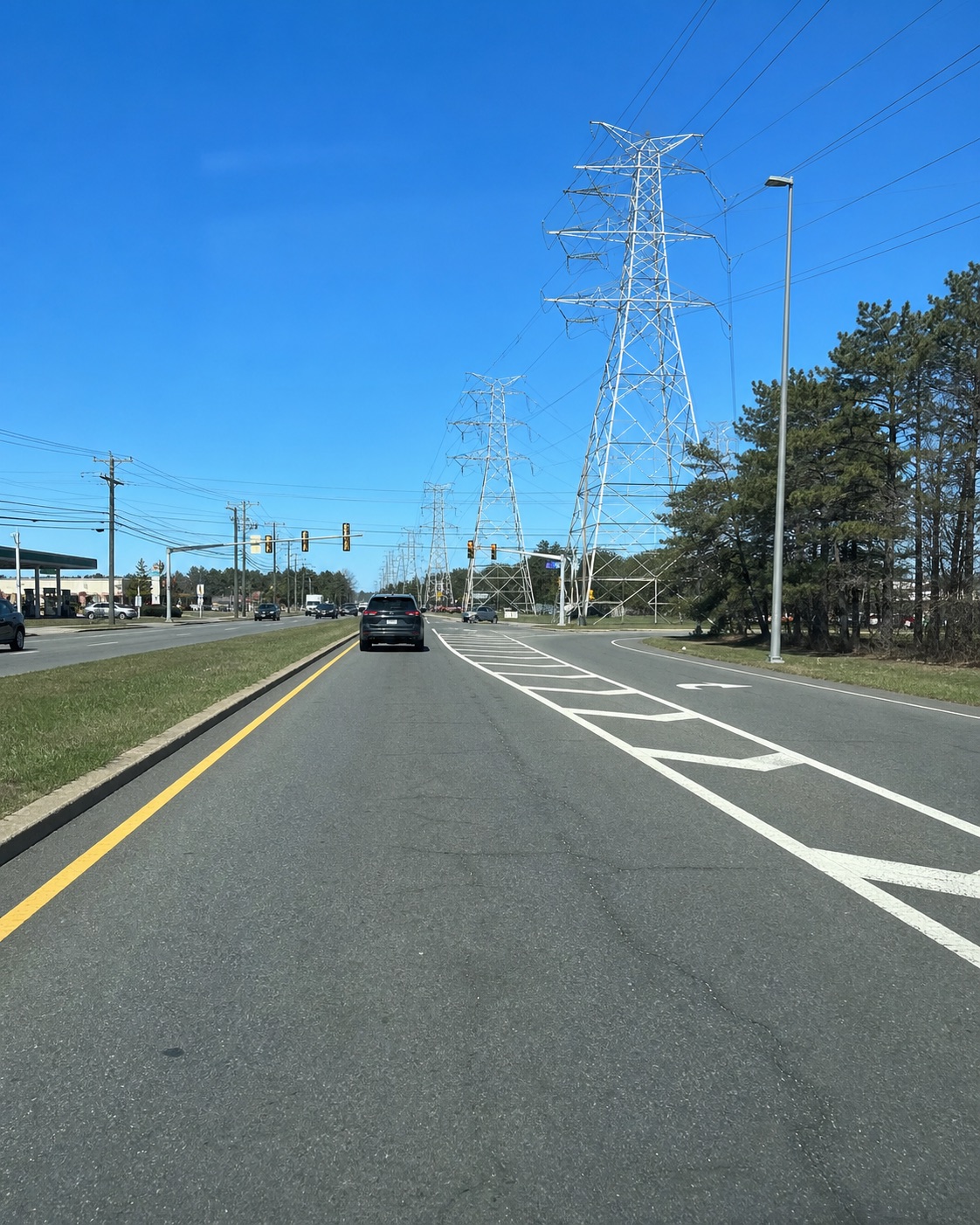
Our Route 37 illustration shows a divided road, a striped area and signals. It is generated imagery inspired by local features, not a verified driveway or intersection. It should not be used to decide which movement was permitted. Preserve your own signs, markings and observations where available. If the illustration does not resemble your location, that difference is a reason to describe your scene more carefully, not to revise your recollection.
Describe the turn as a sequence
The phrase 'turning accident' leaves out the order. Were you waiting for an opening, beginning to move, crossing another path or completing the turn? What did you see before contact? A brief sequence may be more informative than a diagram drawn to show a definite conclusion about fault.
Separate what your vehicle was doing from what you observed the other vehicle doing. If your view was interrupted, include the interruption. If you first saw the other car after the collision, explain that rather than placing it earlier in the story. You can acknowledge uncertainty about a lane or approach direction. The task is to preserve the account you can support, not to build the most persuasive version. Questions about the legal significance of a maneuver need the actual evidence and qualified advice.

A receipt has a narrow job
A receipt can help establish a purchase, a business or a printed transaction time. It usually does not show which driveway you used, where your vehicle waited or the moment contact occurred. Keep a relevant receipt if you have it, but describe its role accurately. A transaction time and an accident time are not interchangeable.
The same applies to a navigation destination or a parking message. These may help explain the trip's context without showing the vehicle's exact position. Preserve original records and avoid stretching their meaning because they are the only dated items available. If a device time, receipt time and recollection differ, keep the difference visible. You do not need to select one as certainly correct before speaking with someone who can help examine the records.
Do not assume a business has a recording of the event
A camera visible outside a property can prompt a reasonable question about whether any relevant recording exists. It does not establish that the camera was operating, that its view included the collision or that footage is available to you. Write down the question without presenting the recording as evidence you already have.
If you contact a business, keep the inquiry narrow and factual. Ask about the appropriate contact or process rather than posting accusations or demanding that staff decide responsibility. Save any response and distinguish it from a promise to provide footage. A qualified professional can explain appropriate requests where necessary. Avoid returning to a dangerous access point to photograph a camera or re-create a turn. A record-organizing task should not introduce another risk on the road.
Keep the commercial strip and bay crossing distinct
Route 37 includes local access questions as well as the route toward the coast. NJDOT identifies the Mathis and Tunney bridge corridor over Barnegat Bay between Toms River and Seaside Heights. That geographic background can orient a journey, but it should not dominate a file about a collision at a mainland access point.
If an insurer or another document describes your location as near the bridge, check whether that matches what you know. 'On the way to Seaside' is a destination description, not proof that the event happened at a bridge approach. NJDOT's older project schedules are also not current traffic instructions. Use them only for their stated historical context. For a turning collision, the immediate access, direction and observed maneuver are the details that need to stay at the center of the account.

Separate the vehicle's position before and after contact
After a collision, vehicles may move to another part of the property or to a safer area. A photograph taken there can preserve damage and surroundings, but it should not be labeled as the point of impact if that is incorrect. Record the move in a separate sentence. This small distinction can explain why a report, towing entry and photograph identify different positions.
Visible damage needs its own description too. Note what the picture shows without using it to diagnose an injury or reconstruct the whole maneuver. Our mirror image is a generated illustration. Even an authentic damaged-mirror photograph would show the damage captured in that frame, not automatically which driver caused it. Keep close views and wider views in the file because they answer different questions.
Organize the letters by subject
The practical work after the accident can include a vehicle estimate, a medical coverage question and a request for a report. Make a folder or index for each subject, and attach the relevant company and claim identifier. Before forwarding a document, confirm the destination and what the recipient requested.
A phrase such as 'send everything about the accident' deserves clarification when the file contains personal or medical information. Ask which items are needed and use a verified channel. Keep copies of submissions and confirmations. If two contacts ask for the same item, note both requests rather than assuming one submission reached both files. The goal is to prevent a record from being lost or misunderstood, not to decide whether a particular cost must be paid.
Leave the next reviewer a useful question
A good first summary might identify the road, the access area, your movement and the point that remains uncertain. It can explain that you have a receipt and photographs but no recording. That gives the next person an honest starting position rather than a conclusion dressed as a timeline.
This article does not tell you who had priority, whether a property owner bears responsibility or what a claim is worth. It offers a way to distinguish the journey, maneuver and documents in a Route 37 file. Seek appropriate medical care for health concerns and discuss legal questions with a qualified lawyer. When asking for help, bring the records you actually possess. Let the missing information remain a question until there is a reliable basis for answering it.